How Snare is helping to bolster modern defence capabilities amid the AUKUS partnership

To help bolster modern defence capabilities, Australia , the United Kingdom (UK), and the United States of America (USA) have established a new partnership, dubbed AUKUS, that prioritises sharing information and technology. There are two primary functions and related lines of effort of the AUKUS partnership.[1]

One key aspect of the agreement is the construction of nuclear submarines, equipping Australia with the capability to operate conventionally armed, nuclear-powered submarines. This places Australia among only seven nations worldwide with such capabilities, while maintaining the highest standards of non-proliferation.

The second function of AUKUS is to develop and provide joint advanced military capabilities that promote security and stability in the Indo-Pacific region, including quantum technologies, artificial intelligence (AI) and autonomy, advanced cyber capabilities, and hypersonic and counter-hypersonic capabilities.
The complex, multi-year decade investment represents the start of a transformative pathway for Australia in terms of its defence and beyond, including the continued evolution of industry, technology, and scientific advancement. In particular, it will help to transform Australia’s skills, productivity, industrial capacity, and science and research capabilities, while also benefiting Australian workers through massive investments to skills and training.

As part of this arrangement, new facilities and infrastructure must be set up to support the ongoing development underpinning AUKUS. As these new facilities are designed and commissioned, they will need highly secure environments to store and manage all relevant information, with many existing defence contractors contributing to the project.

As the AUKUS partnership includes the management and storage of highly sensitive and classified information, information access must be strictly controlled, with supervision requiring tightly-managed, role-based access controls. As such, defence contractors contributing to AUKUS must be able to manage and report on:

  • who accessed the information and if they were authorised to do so, with specific details on the user and device the access was from,
    including role/s used
  • when it was accessed, down to the second
  • what users did with the information accessed, including if it was: read; modified, changed,
    or deleted; or copied to another location
  • if it was copied, where it went, and if it was copied via email, USB device, printed, etc.
  • how the information was accessed, e.g., via an application ordatabase and
    what tools or commands were used to access it.

This is where Snare can help.

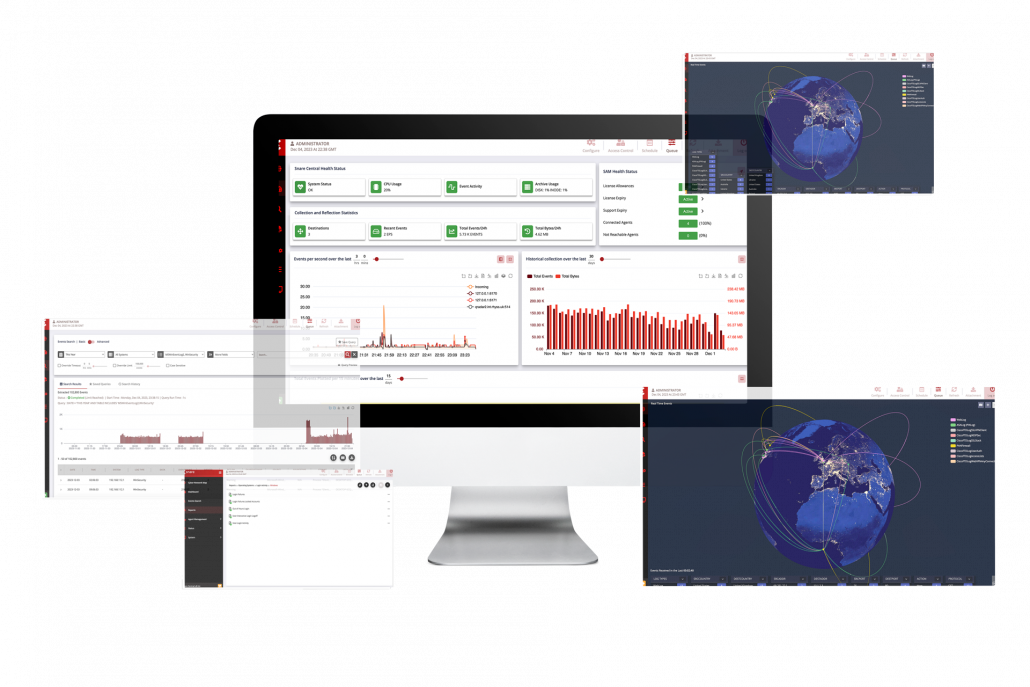
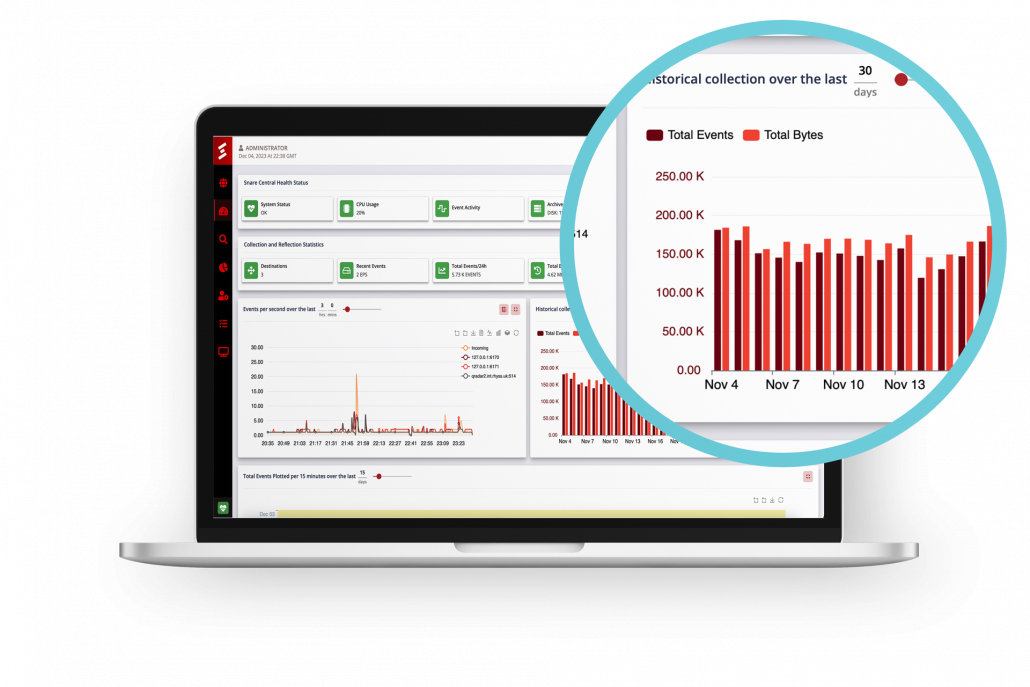
Snare agent technology to collect system logs of all user activity, as well as database and network device activity. This data is then channeled into our Snare Central platform for long-term storage, analytics, alerting, and reporting, while also allowing for specific data to be sent to other SIEM or analytics platforms. Snare has a proven history in office-based environments, but Snare Agents and Snare Central have also been effectively used in the field for many years. They support defense assets on land, at sea, and in air, ensuring the integrity of roles and operations by collecting necessary system and user logs. This helps in identifying risks and providing early detection of other threats to these environments. The ability for Snare Central to store large amounts of log data with its 40-50:1 data compression makes it a cost-effective solution for the immense data these environments generate. The fact that snare already operates in many air-gaped/data diode networks within secure government agencies and defense settings speaks to our proven track record.

Snare has a track record of helping organizations with security logging across many areas, including:

  • Maturity models for event log management and zero trust
  • NIST and zero trust
  • XDR and Sysmon
  • FISMA compliance
  • MITRE ATT&CK and Snare mapping for detection
  • File integrity monitoring (FIM), file access monitoring (FAM), registry integrity monitoring (RIM), and registry access monitoring (RAM).

Along with our out-of-the-box compliance, reporting, event searching to correlate user and system activity, and analytics capabilities, we can help ensure that security teams have the tools they need not only for compliance but also for threat hunting.

Prophecy International is well-positioned to assist all three nations with the management of this information and systems. This ensures that their log management needs are met both now and as their needs evolve in the future.

Ultimately, the primary goal is to keep all the information safe, secure, and accessible only to those with a need to know.