Snare Answer Hub

The Snare Answers Hub provides clear, authoritative answers to the most common questions about log collection, SIEM cost management, forensic logging, compliance, and security investigations.

Each answer is written for security practitioners and reflects how modern organisations collect, control, and use log data across high-volume, regulated, and enterprise environments.


We have Structured these answers in 6 Categories

Category 1: Getting Started with Snare

Category 2: Forensic Logging & Investigations

Category 3: SIEM Cost, Volume & Noise

Category 4: Log Filtering, Compression & Routing

Category 5: Missing Logs & Visibility

Category 6: Compliance, Retention & Audit

Category 1: Getting Started with Snare

What is Snare?

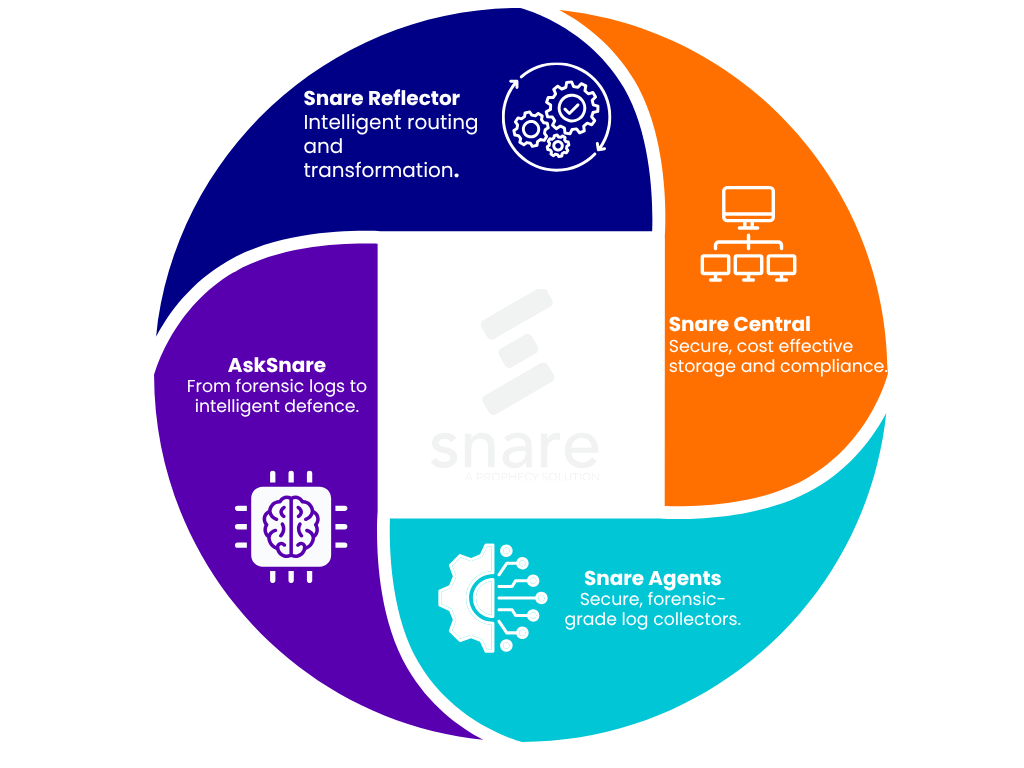
Snare is a cybersecurity log management platform that collects, filters, compresses, and routes high-fidelity log data from endpoints and systems to SIEMs, SOC tools, and analytics platforms. It helps organisations reduce log volume and SIEM costs while preserving forensic integrity for compliance, investigations, and threat detection in enterprise and regulated environments.

What is Snare Agent?

Snare Agent is an endpoint log collection application that captures detailed security, system, and audit events from Windows, Linux, Unix, and macOS systems. It applies advanced filtering, translation, compression, and policy-based routing before forwarding logs to SIEMs or log platforms, reducing ingestion costs while maintaining forensic-grade evidence.

What is Snare Central?

Snare Central is a centralised log management and control platform that governs how logs are collected, filtered, routed, retained, and replayed across an organisation. It provides visibility into log pipelines, detects missing or silent logs, enforces compliance policies, and enables forensic replay to support audits, investigations, and threat hunting.

What is Snare Analytics?

Snare Analytics provides insight into log volume, log quality, and log pipeline performance. It helps security teams understand where logs originate, how they flow, where noise occurs, and how optimisations such as filtering and compression impact SIEM costs, compliance coverage, and investigation readiness.

Category 2: Forensic Logging & Investigations

What is forensic-grade logging? 

Forensic-grade logging is the practice of collecting, preserving, and retaining logs in a way that ensures accuracy, completeness, and evidentiary integrity. It allows organisations to reconstruct events during investigations, prove compliance during audits, and support legal or regulatory scrutiny without gaps, tampering, or loss of context.

Why is forensic logging important for cybersecurity?

Forensic logging is critical because most security incidents are discovered after they occur. Without reliable and complete logs, organisations cannot determine what happened, when it happened, or how systems were affected. Forensic-grade logs enable incident response, root-cause analysis, compliance validation, and defensible security decisions.

What logs matter most during a security investigation?

The most important investigation logs include authentication events, privilege escalation activity, process execution, file access, configuration changes, and network connections. These logs provide the context required to trace attacker behaviour, identify compromised accounts, and determine the scope and impact of an incident.

What is log replay?

Log replay is the ability to re-process historical log data as if it were occurring in real time. It allows security teams to apply new detection rules, analytics, or queries to past events, enabling retrospective investigations, threat hunting, and compliance validation.

Why is log replay important?

Log replay is important because threats, indicators, and compliance requirements often emerge after data is collected. Replay enables organisations to uncover previously missed activity, validate new detection logic, and respond to incidents without relying solely on what was known at the time of ingestion.

Category 3: SIEM Cost, Volume & Noise

What causes SIEM ingestion costs to grow?

SIEM ingestion costs increase due to rising log volumes, noisy or low-value events, expanding infrastructure, and long retention requirements. As organisations add cloud services, endpoints, and security tools, unfiltered logs dramatically increase storage and processing costs without delivering proportional security value.

How can organisations reduce SIEM ingestion costs?

Organisations reduce SIEM ingestion costs by filtering low-value events, compressing log data, and routing only high-value security logs to SIEM platforms. Pre-processing logs before ingestion preserves critical forensic data while significantly lowering licensing, storage, and processing expenses.

What is log noise?

Log noise refers to excessive low-value or repetitive events that obscure meaningful security signals. High noise levels increase SIEM costs, slow investigations, and overwhelm analysts, making it harder to detect real threats or anomalies.

How can organisations reduce log noise?

Organisations reduce log noise through intelligent filtering, event normalisation, and policy-based collection. This improves the signal-to-noise ratio, accelerates investigations, and lowers SIEM ingestion costs without sacrificing forensic or security coverage.

Category 4: Log Filtering, Compression & Routing

What is log filtering?

Log filtering is the process of selecting which events are collected, forwarded, or stored based on relevance, risk, or compliance needs. Effective filtering reduces noise, improves log quality, and lowers SIEM costs while ensuring critical forensic events are retained.

Does log filtering reduce security visibility?

When implemented correctly, log filtering does not reduce security visibility. Instead, it removes redundant or low-value events while preserving high-fidelity logs required for investigations, compliance, and threat detection, improving analyst efficiency and reducing alert fatigue.

What is log compression?

Log compression reduces the storage footprint of log data by encoding events more efficiently without losing information. Compression lowers storage and transmission costs, improves performance, and enables longer retention while maintaining forensic reconstruction capabilities.

How does log compression help with compliance?

Log compression helps organisations meet compliance retention requirements by reducing storage and infrastructure costs. This enables longer retention of forensic-grade logs without compromising integrity, accessibility, or audit readiness in high-volume environments.

What is log routing?

Log routing directs different types of log events to different destinations based on policy. This allows organisations to send high-value security logs to SIEMs, operational logs to analytics platforms, and archive logs for compliance, optimising cost and performance.

How does log routing reduce costs?

Log routing reduces costs by ensuring only relevant events are sent to expensive platforms like SIEMs. By separating security, operational, and compliance logs, organisations avoid unnecessary ingestion while maintaining full visibility and coverage.

Category 5: Missing Logs & Visibility

What are missing or silent logs?

Missing or silent logs occur when expected log sources stop sending events without generating alerts. This creates blind spots where security activity, system failures, or malicious behaviour may go undetected, increasing operational and security risk.

Why are missing logs a security risk?

Missing logs are a security risk because attackers often disable or evade logging to hide activity. If gaps go undetected, incidents may remain hidden, investigations may fail, and compliance audits may reveal critical deficiencies.

How can organisations detect missing logs?

Organisations detect missing logs by monitoring log flow continuity, validating expected event patterns, and alerting when sources go silent. Proactive detection ensures logging coverage remains intact and security teams are notified immediately when gaps occur.

What is end-to-end log visibility?

End-to-end log visibility is the ability to see where logs originate, how they are processed, where they are sent, and whether they arrive successfully. This visibility detects failures, ensures coverage, and supports compliance, investigations, and security operations.

Category 6: Compliance, Retention & Audit

What is log retention?

Log retention is the practice of storing log data for a defined period to meet security, operational, and regulatory requirements. Retention policies balance compliance obligations, investigation needs, and storage costs while ensuring logs remain accessible and trustworthy.

How long should logs be retained?

Log retention periods vary by regulation, industry, and risk profile. Many frameworks require retention from several months to multiple years. Organisations should align retention policies with compliance mandates and the typical timeframes in which incidents are discovered.

What do auditors look for in logging?

Auditors look for complete log coverage, consistent retention, tamper resistance, time synchronisation, and the ability to retrieve logs on demand. They also assess whether logging controls align with documented policies and regulatory requirements.

What is log integrity?

Log integrity ensures that log data has not been altered, deleted, or manipulated after collection. Maintaining integrity is essential for forensic investigations, regulatory compliance, and legal defensibility.

Why is log integrity critical for compliance?

Log integrity is critical because compliance frameworks require trustworthy evidence. If logs cannot be proven accurate and complete, organisations may fail audits, face penalties, or be unable to demonstrate due diligence during investigations.

Why is log management important for regulated industries?

Log management is essential for regulated industries because it supports auditability, incident response, and compliance with strict retention and integrity requirements. Reliable logs provide evidence of control effectiveness and enable rapid response to security or operational events.

Find out how much storage and monthly SIEM Costs Snare can Save you!