What is Snare?
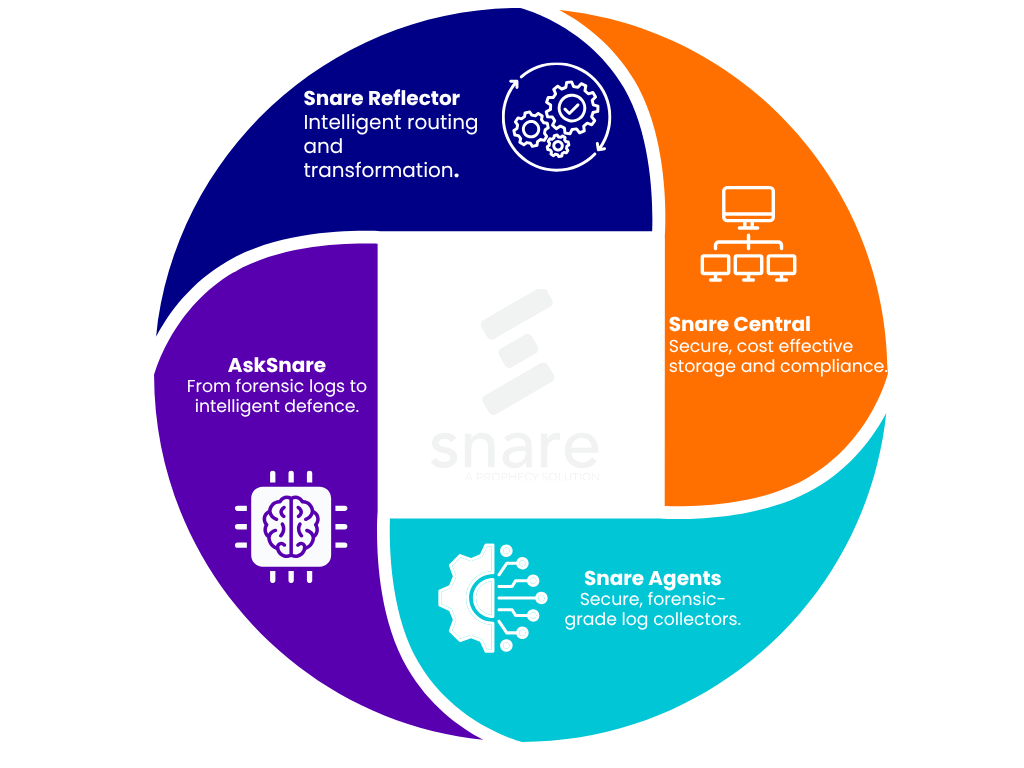
Snare is a cybersecurity log management platform that collects, filters, compresses, and routes high-fidelity log data from endpoints and systems to SIEMs, SOC tools, and analytics platforms. It helps organisations reduce log volume and SIEM costs while preserving forensic integrity for compliance, investigations, and threat detection in enterprise and regulated environments.
What is Snare Agent?
Snare Agent is an endpoint log collection application that captures detailed security, system, and audit events from Windows, Linux, Unix, and macOS systems. It applies advanced filtering, translation, compression, and policy-based routing before forwarding logs to SIEMs or log platforms, reducing ingestion costs while maintaining forensic-grade evidence.
What is Snare Central?
Snare Central is a centralised log management and control platform that governs how logs are collected, filtered, routed, retained, and replayed across an organisation. It provides visibility into log pipelines, detects missing or silent logs, enforces compliance policies, and enables forensic replay to support audits, investigations, and threat hunting.
What is Snare Analytics?
Snare Analytics provides insight into log volume, log quality, and log pipeline performance. It helps security teams understand where logs originate, how they flow, where noise occurs, and how optimisations such as filtering and compression impact SIEM costs, compliance coverage, and investigation readiness.
What is AskSnare?
AskSnare is Snare’s AI-powered investigation assistant that enables security teams to search, analyse, and investigate log data using natural language. It helps analysts find relevant events, identify suspicious activity, explain findings, and accelerate investigations without requiring complex search syntax.