Why Log Collection Still Matters: Getting the Basics Right in a Zero Trust World

In the era of sophisticated cyber threats and complex IT environments, the shift toward Zero Trust architecture is no longer optional—it’s essential. But as organizations rush to adopt advanced frameworks and AI-driven security solutions, many overlook the foundational layer of all effective security strategies: log collection.

Without comprehensive, high-fidelity log data, even the most advanced Zero Trust initiatives are rendered ineffective. This paper explores why log collection still matters—perhaps more than ever—and outlines how organizations can get the basics right to build a resilient cybersecurity posture that aligns with the principles of Zero Trust.


Introduction: The Zero Trust Imperative

Zero Trust is a strategic approach to cybersecurity that eliminates the assumption of trust. Based on the principle of “never trust, always verify,” Zero Trust requires continuous authentication, strict access controls, and real-time threat detection across users, devices, and systems.

However, implementing a Zero Trust model isn’t just about adopting new tools—it requires complete visibility into your network activity. This visibility starts with effective log collection, aggregation, and analysis.

Why Log Collection Is Still Foundational

1. Visibility and Context Are Non-Negotiable

Zero Trust is driven by continuous verification. Log data provides the forensic trail necessary to:

  • Validate access attempts
  • Monitor lateral movement
  • Detect anomalous behavior
  • Investigate incidents post-breach

Without detailed logs, it’s impossible to determine who did what, when, where, and how.

2. Data is the Fuel for Detection and Response

Security tools such as SIEMs, SOAR platforms, UEBA systems, and XDR solutions all rely on log data as the source of truth. If log collection is inconsistent, incomplete, or delayed, it leads to:

  • False negatives (missed attacks)
  • Slower mean time to detection (MTTD)
  • Inaccurate threat modeling

3. Compliance Still Requires It

Log retention is not just a security best practice—it’s a regulatory requirement in most industries. Frameworks such as:

  • ISO 27001
  • NIST 800-53
  • PCI-DSS
  • HIPAA
  • APRA CPS 234 (AU)
    require auditable logs to prove due diligence and enable incident response.

The Challenges of Modern Log Collection

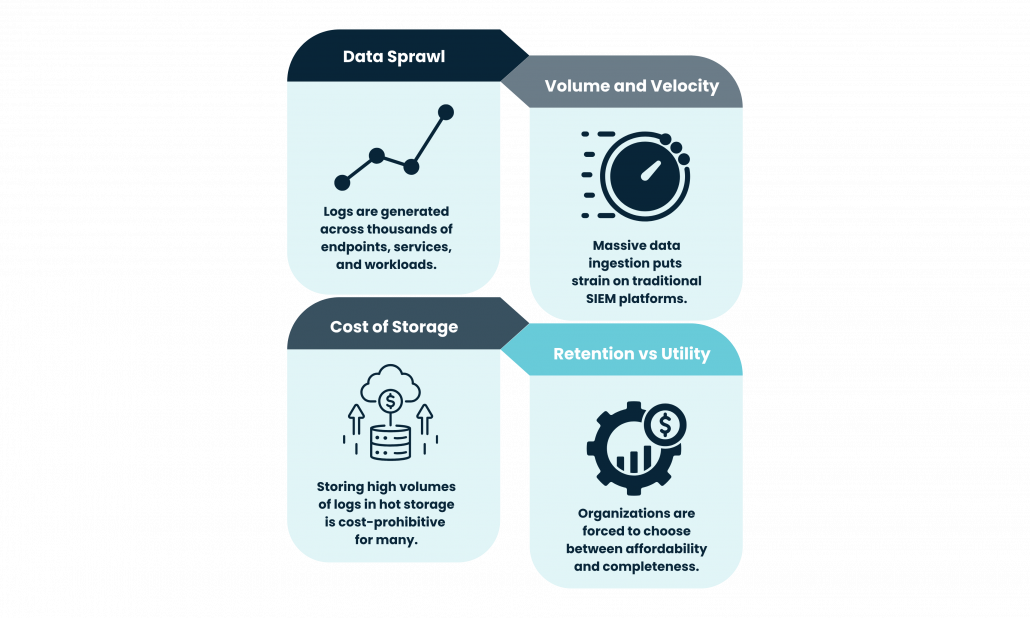
As environments grow more complex—spanning cloud, on-prem, hybrid, containers, and SaaS apps—log collection faces several challenges:

Getting the Basics Right in a Zero Trust World

1. Comprehensive Coverage

Ensure logs are collected from all key sources:

  • Endpoints (Windows, Linux, macOS)
  • Cloud platforms (AWS, Azure, GCP)
  • SaaS apps (M365, Salesforce)
  • Firewalls, proxies, and network appliances
  • Identity providers (Okta, Azure AD)

2. Log Normalization and Correlation

Implement tools that:

  • Normalize disparate log formats
  • Correlate across sources
  • Enrich with contextual metadata

This enables accurate behavior analysis and threat detection.

3. Intelligent Storage and Replay

Use solutions that:

  • Compress and deduplicate log data
  • Tier storage (hot, warm, cold) to balance cost and accessibility
  • Enable replay to SIEMs/XDRs for historical investigation without re-collection

4. Support for Open Standards and Integration

Avoid vendor lock-in by using tools that:

  • Support industry-standard formats (e.g., syslog, JSON, CEF)
  • Integrate via native APIs into SIEMs, SOARs, and cloud-native platforms

Ensure future-proof interoperability

Case in Point: Log Collection in Recent Attacks

Recent breaches highlight the value of long-term log storage and real-time collection. In many cases, delayed detection was partly attributed to incomplete or short-lived logs, making root cause analysis and containment more difficult.

Organizations with extensive log trails could:

  • Identify patient zero
  • Trace lateral movement
  • Close vulnerabilities before further exploitation

Sources:

How Snare Helps: Cost-Effective, Scalable Log Collection

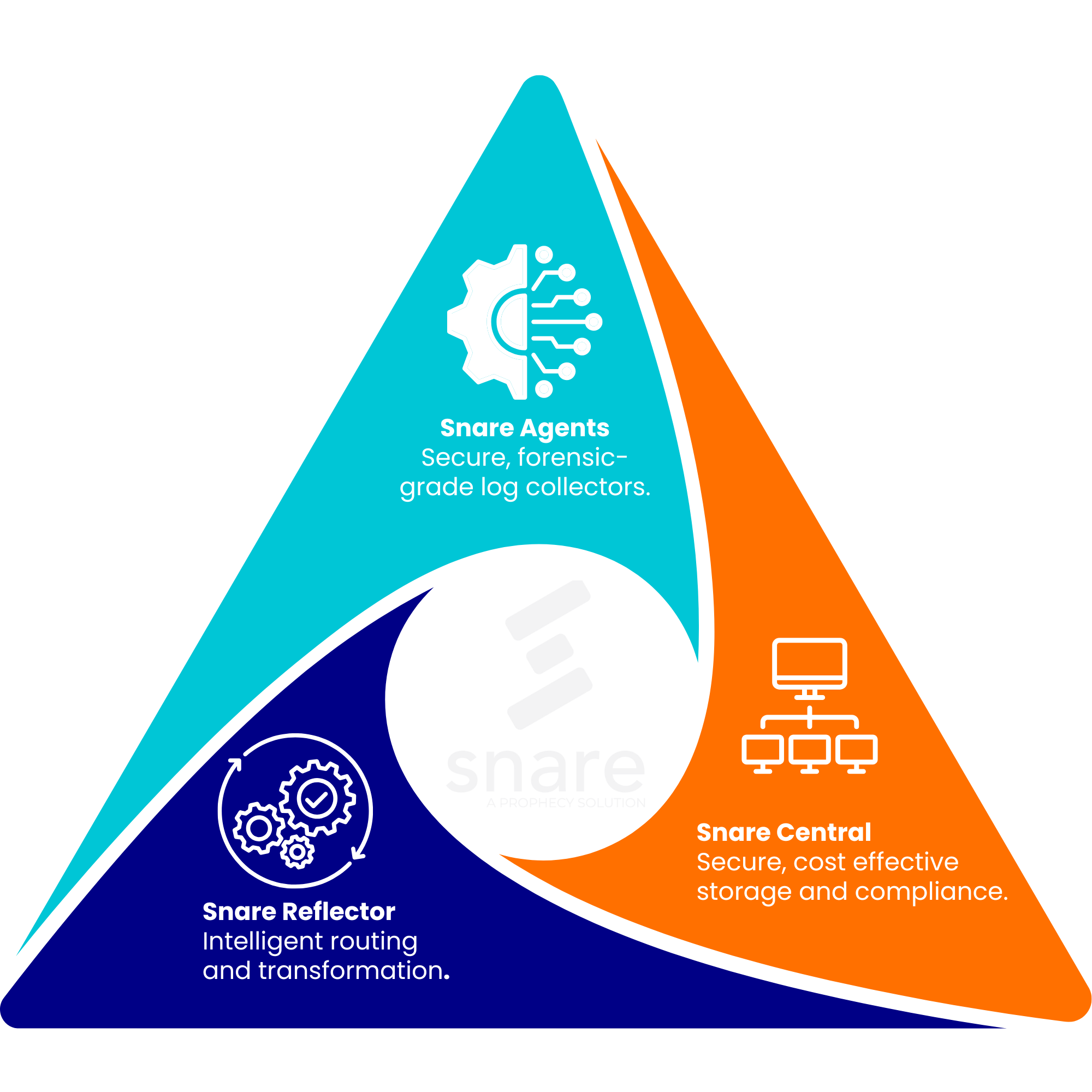
Snare’s suite of solutions helps organizations meet the log collection demands of a Zero Trust environment:

  • Snare Agent: Lightweight, high-performance agents for secure, reliable endpoint log collection.
  • Snare Central: Centralized log management with compression, filtering, and long-term retention capabilities.
  • Snare Store: Cost-effective storage with up to 90% reduction in storage footprint. Includes replay functionality to eliminate re-ingestion costs.
  • API Integration: Native support for Microsoft Sentinel, Splunk, Securonix, QRadar, and more.

With Snare, organizations don’t have to choose between visibility and affordability.

Conclusion: Don’t Skip the Fundamentals

In a Zero Trust world, you can’t secure what you can’t see. Advanced frameworks and automation are powerful, but they’re only as good as the data they ingest. Log collection is not a checkbox—it’s the foundation of detection, response, and resilience.

To build a truly Zero Trust-ready architecture:

  1. Start with logs
  2. Invest in reliable, scalable collection
  3. Prioritize context, retention, and replayability

Because when the next incident happens—and it will—logs may be the only window into what went wrong, and how to fix it.

Ready to Strengthen Your Zero Trust Strategy from the Ground Up?

Don’t let visibility gaps undermine your cybersecurity investments. With Snare, you can achieve complete, reliable, and cost-effective log collection—giving your Zero Trust architecture the data it needs to perform.

Snare Solutions
Privacy Overview

This website uses cookies so that we can provide you with the best user experience possible. Cookie information is stored in your browser and performs functions such as recognising you when you return to our website and helping our team to understand which sections of the website you find most interesting and useful.